
- All
- Product Name
- Product Keyword
- Product Model
- Product Summary
- Product Description
- Multi Field Search
Views: 0 Author: Site Editor Publish Time: 2026-11-19 Origin: Site


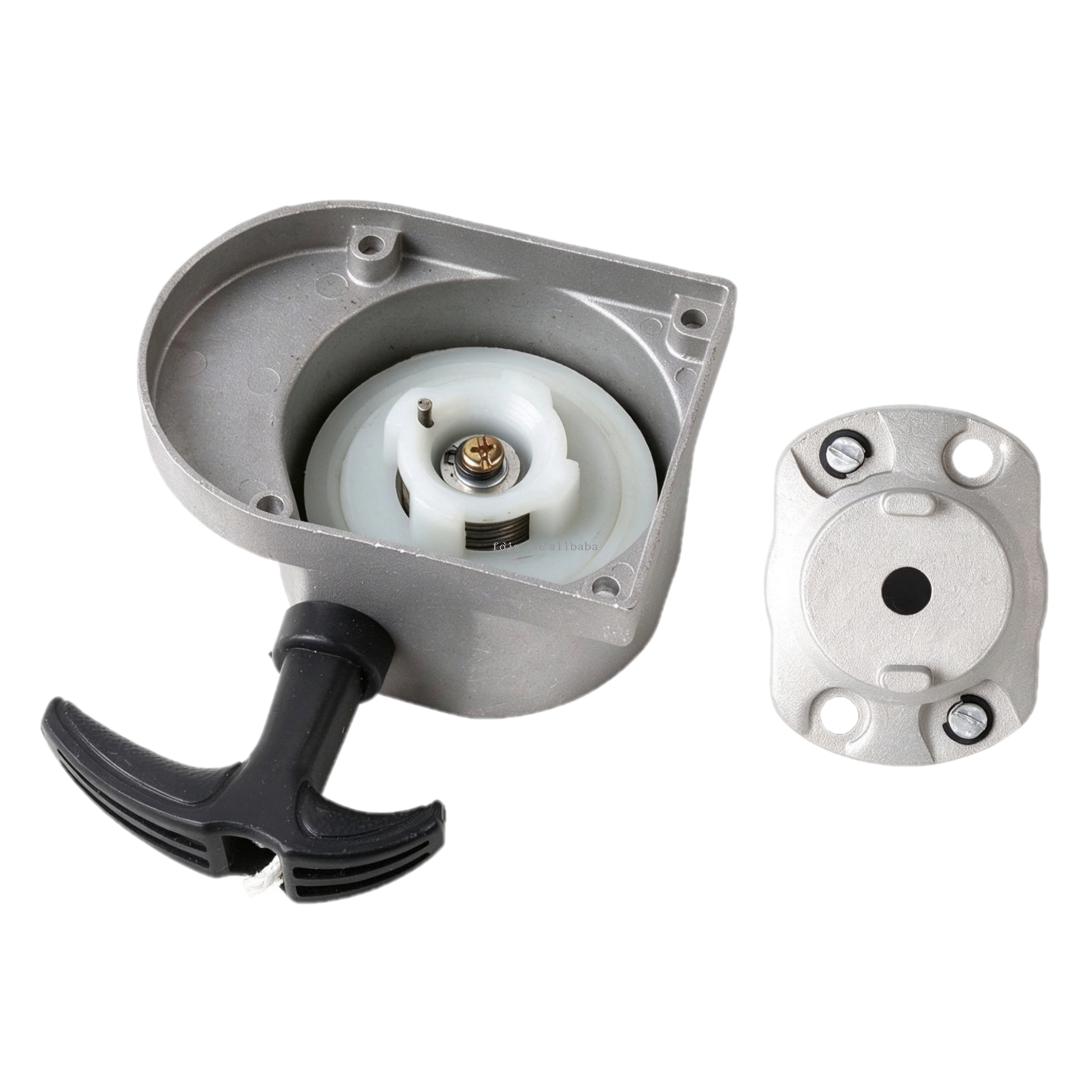
The claw plate is sold on its own, so check whether its teeth have rounded off before buying a whole starter.
What is in the kit? A die cast alloy housing, the white spool inside it, the return spring in the housing, a nylon rope with a T handle at the end, and that separate metal plate with two lugs on it, the claw plate, held by three bolts.
How does it turn the engine over? Pull the rope and the spool turns, the claws on the spool are thrown outwards, they catch the teeth on the flywheel side, and the crank is carried past the compression stroke. Let go and the return spring winds the rope back in. Whether the claws catch and whether they release again depends on the fit between the claw plate and the claws.
How does one part cover so many sizes? The starting layout on these single cylinder two strokes has been carried down the same line. Mini bikes, pocket bikes and small dirt bikes tend to run the 47, 49 and 50cc sizes, while two stroke motorized bicycles run 49, 60, 66, 70 and 80cc, and the housing and the claw plate come from the same family of sizes. A different nominal size does not mean the bolt pattern is identical, so check the position of the three mounting holes, the shape of the claw teeth and the thickness of the spool against the old part before ordering.
Three ways they fail, three different parts. If it jams halfway and the pull goes slack in your hand, the claws are rounded and no longer catching, so the claw plate is the part. If the rope will not wind back in and you have to feed it by hand, the return spring has gone soft or broken. If it pulls freely but the engine does not turn, the claws are not being thrown out or the claw plate has lost a tooth. A cracked housing, a spool worn with a step in it, or a broken spring are the three cases that call for the whole assembly.
Two things when fitting. Start all three bolts a few threads before drawing them down, corner to corner, rather than taking one bolt all the way first. And keep the rope exit facing the same way as on the old part, or the rope will rub the housing once it is back on the machine. Pull it twice in the air first, to see that the rope returns cleanly and the claws throw out sharply, then fit it.


