
- All
- Product Name
- Product Keyword
- Product Model
- Product Summary
- Product Description
- Multi Field Search
Views: 0 Author: Site Editor Publish Time: 2026-06-22 Origin: Site


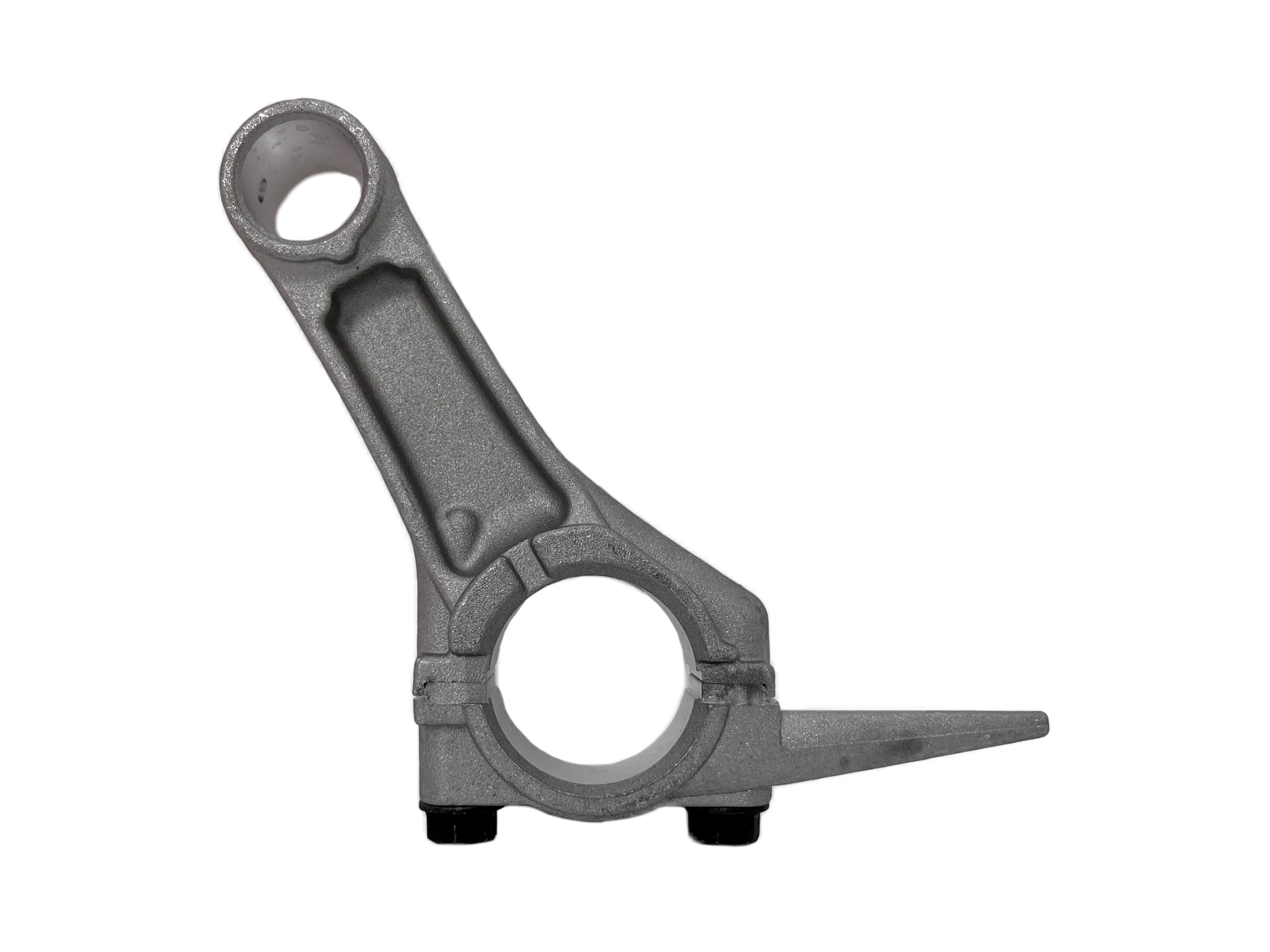
The connecting rod is the "power transmission bridge" in an engine—converting the piston’s reciprocating motion into the crankshaft’s rotational power. Its performance directly determines the engine’s power output efficiency and operational stability, and the 168F rod is the dedicated core component of 168F small engines.
This rod is made of high-density cast alloy: it has sufficient rigidity to transmit power, and moderate toughness to buffer the piston’s motion impact, avoiding fracture risks; the precision machining of the piston pin hole and crankshaft hole is controlled within 0.01mm, ensuring fit with the piston and crankshaft, reducing vibration and energy loss caused by motion gaps; the thickened design and streamlined contour of the rod arm further optimize force distribution, withstanding continuous loads under the 168F engine’s high speed.
When a 168F engine experiences power attenuation or abnormal noise (mostly due to rod wear or deformation), replacing this 168F rod is an efficient solution. Its specifications are identical to the original factory; after installation, the engine’s power transmission efficiency can be restored without additional debugging, adapting to the maintenance needs of 168F-powered equipment such as generators and power tools.
From home backup devices to small industrial tools, the 168F rod, with its high-quality materials and precise craftsmanship, becomes a cost-effective choice for 168F engine maintenance, allowing the device to regain strong, stable power output.


